Planning your day well is not about cramming as many tasks as possible into a schedule. It is about deciding what matters most, creating a realistic plan, and making it easier to follow through. Productivity platforms like Todoist and Asana consistently frame daily planning around prioritization, realistic task selection, and reviewing your day with intention rather than reacting to everything at once.
See our calendars:
- Year at a Glance Calendar Planner – Template 1
- Year at a Glance Calendar Planner – Template 2
- Year at a Glance Calendar Planner – Template 3
- Year at a Glance Calendar Planner – Template 4
- Full Year Organizer Bundle – 4 Year at a Glance Calendar Templates
Start with your goals, not just your to-do list
One of the easiest mistakes in daily planning is starting with whatever feels urgent. Todoist recommends building your day around your larger goals first, then looking at your week as a whole, and only after that fitting in must-do tasks. That approach helps your day support your bigger priorities instead of being driven only by interruptions.
If you want to plan your day effectively, begin by asking one simple question: What would make today feel productive and meaningful? That usually leads to a smaller, clearer daily plan.
Keep your daily plan realistic
A good daily plan should be usable, not aspirational. Asana recommends taking a few minutes each morning to organize priorities and a few minutes at the end of the day to review what is next. Todoist makes a similar point: daily planning should create calmer, more focused productivity, not a packed list that guarantees disappointment.
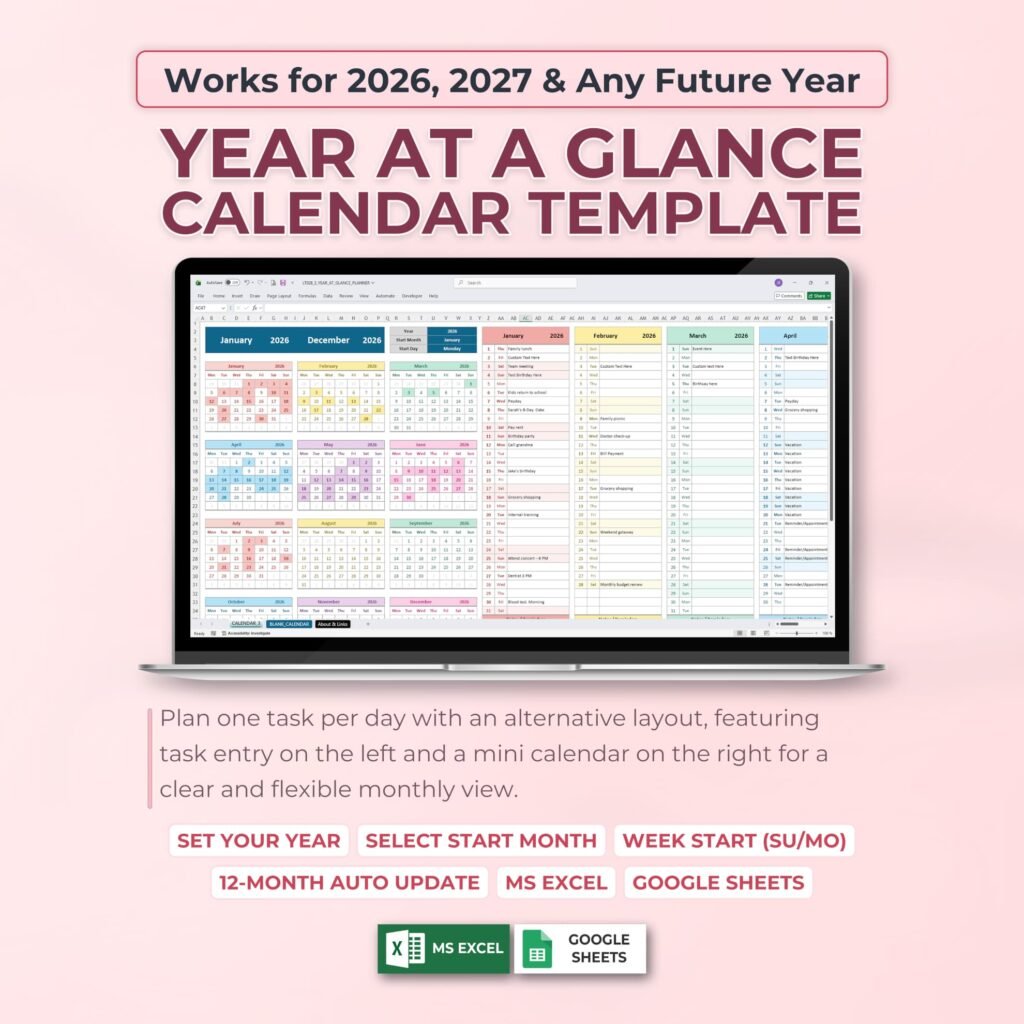
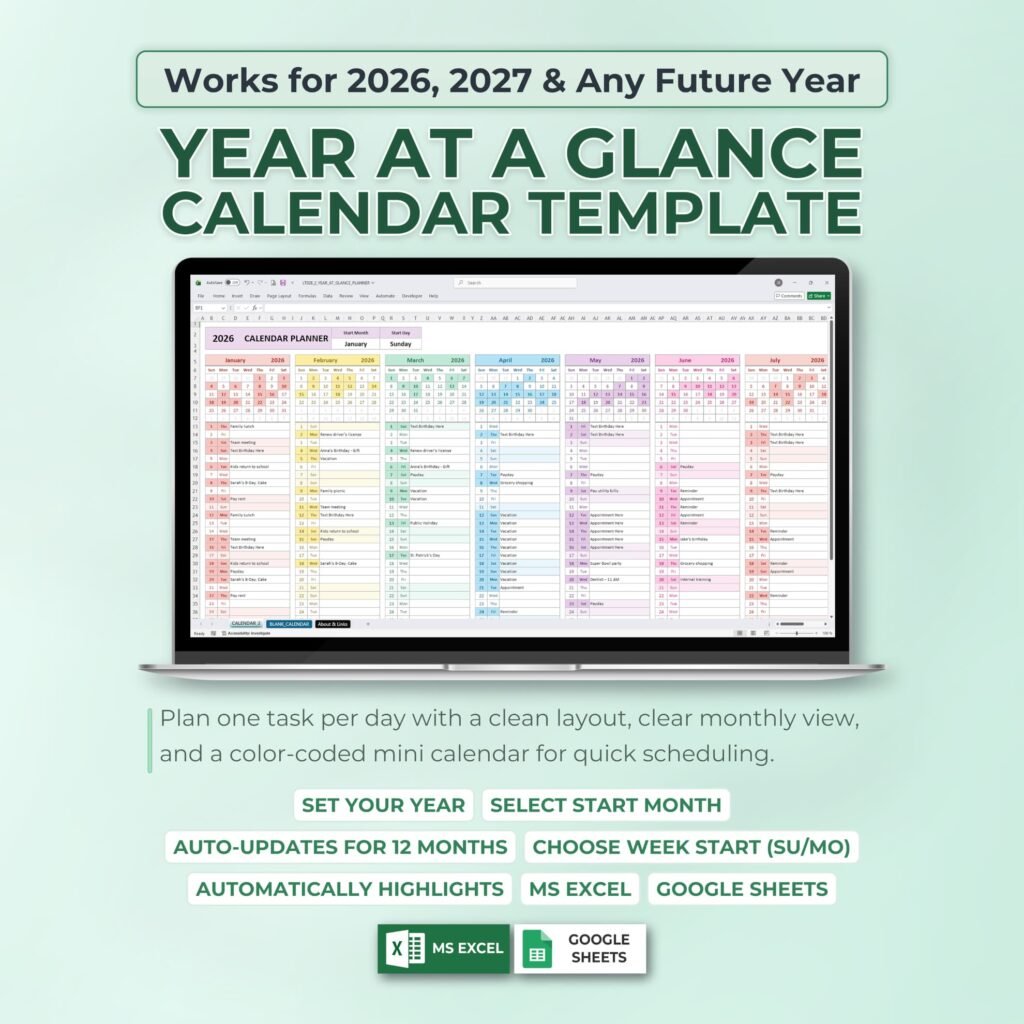
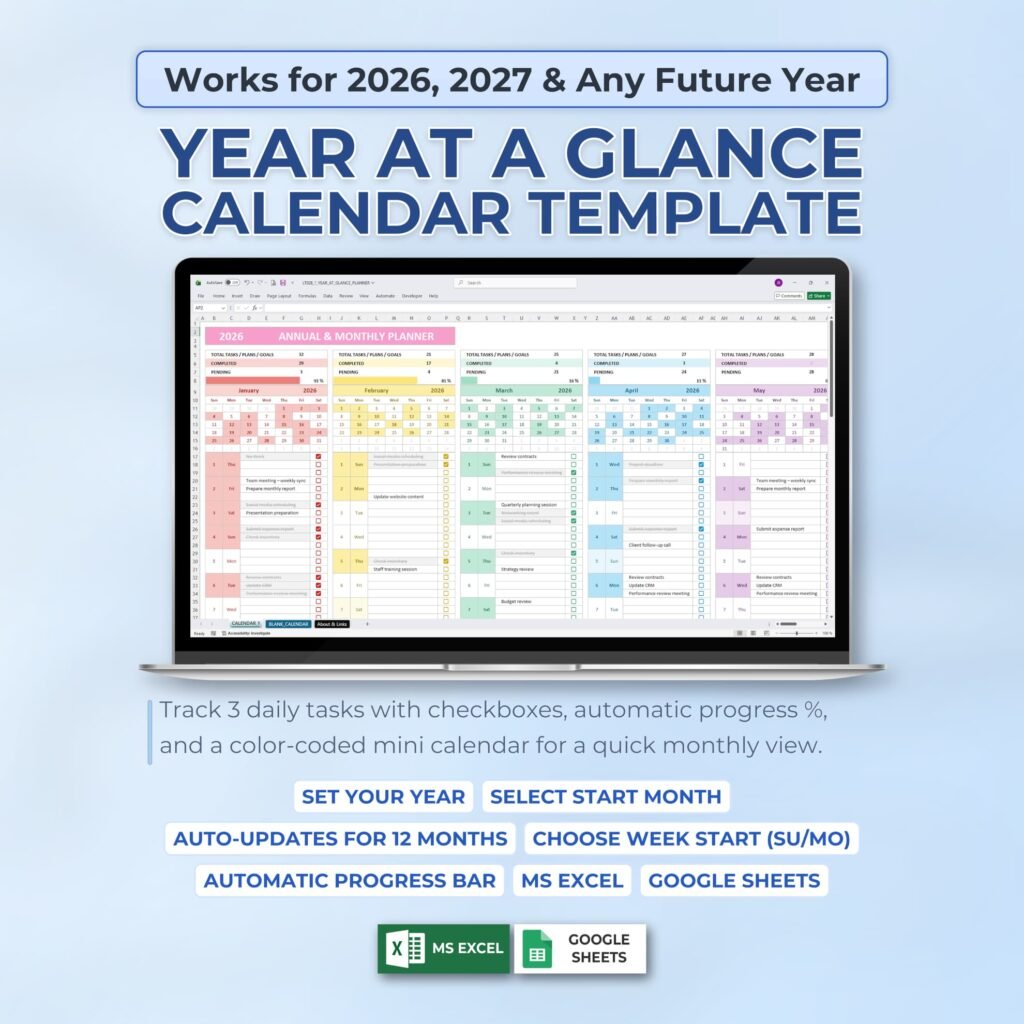
That is why simpler planner layouts work so well. If your day only has room for one key task, plan one. If your schedule is busier, use a layout that lets you map a few priorities without turning the page into clutter.
Prioritize before you schedule
Prioritizing is what turns a list into a plan. Todoist’s Ivy Lee and 1-3-5 method guides both emphasize narrowing your attention to a limited number of meaningful tasks instead of treating everything as equally important. The Eisenhower Matrix article makes a similar point by separating urgent work from important work.
A simple way to use this in real life is:
- choose one top-priority task
- add one or two medium-priority tasks
- leave some space for appointments, admin, or unexpected work
That is often enough to make your day feel structured without becoming rigid.
Use a visible daily layout
Planning works better when you can see your day clearly. Asana’s schedule resources describe templates as reusable structures for daily, weekly, or monthly planning, while Google Calendar positions calendar-based organization as a way to stay on top of plans at home and at work.
This is why a simple day-by-day planner format is so useful. A visible layout reduces mental load. Instead of trying to remember everything, you move it into a system you can review at a glance.
Make your plan flexible enough to use
A daily plan should guide you, not trap you. Todoist’s guidance on planning your day and using the Today view focuses on reviewing, rescheduling, and building a realistic plan instead of treating the list as fixed no matter what happens.
In practice, that means your planner should let you adjust without starting over. If the plan is too complicated, you are less likely to stick with it.
End the day by setting up tomorrow
One of the easiest ways to make daily planning easier is to plan the next day before the current one ends. Asana explicitly recommends beginning and ending your day in your task view, while Todoist’s 1-3-5 guide suggests setting up your next day the evening before.
That small habit reduces morning friction and helps you start the day with direction.
Final thoughts
If you want to plan your day effectively, focus on clarity, priority, and realism. Start with your goals, choose a manageable number of tasks, and use a daily layout that makes the day easy to review. The best daily planning system is not the most complicated one. It is the one you can actually use every day. That principle runs through the guidance from both Todoist and Asana.