Keeping a blood pressure log is one of the easiest ways to make your home readings more useful. A single number does not tell you much by itself, but a consistent record can show trends over time and give your healthcare professional better information to review. The American Heart Association and CDC both provide home blood pressure logs and recommend recording readings regularly instead of relying on occasional spot checks.
If you want a cleaner way to organize your readings, try a blood pressure log template that helps you track morning and evening measurements, pulse, and trends in one place.
Why a blood pressure log matters
A blood pressure log helps turn scattered readings into something meaningful. When you write down your readings over several days or weeks, it becomes easier to notice patterns, compare morning and evening measurements, and spot changes that may otherwise go unnoticed. The AHA specifically recommends bringing a record of home readings to appointments, and its current blood pressure log says to check for at least 3 days before an appointment, with 7 days preferred.
What to include in a blood pressure log
A useful blood pressure log should include the date, time, and the actual reading. If you take more than one reading, record both rather than picking the one you like best. The AHA and CDC log sheets also support taking multiple readings and keeping a consistent written record. Adding short notes can also help, such as whether the reading was taken in the morning or evening, whether you had symptoms, or whether you had caffeine, stress, exercise, or medication beforehand.
How often should you record blood pressure at home?
A simple routine works best. The American Heart Association’s current log recommends taking two readings, one minute apart, twice a day. The suggested times are in the morning before taking medication and eating, and again at bedtime. The CDC’s blood pressure log also recommends taking readings at the same time each day and taking at least two readings 1 or 2 minutes apart.
For many people, that means a very practical structure: morning and evening, every day, using the same format. This is one reason why searches like “how to keep a blood pressure log” and “how often to record blood pressure at home” are so closely connected. A clear routine makes the log much easier to maintain.
How to make your log more accurate
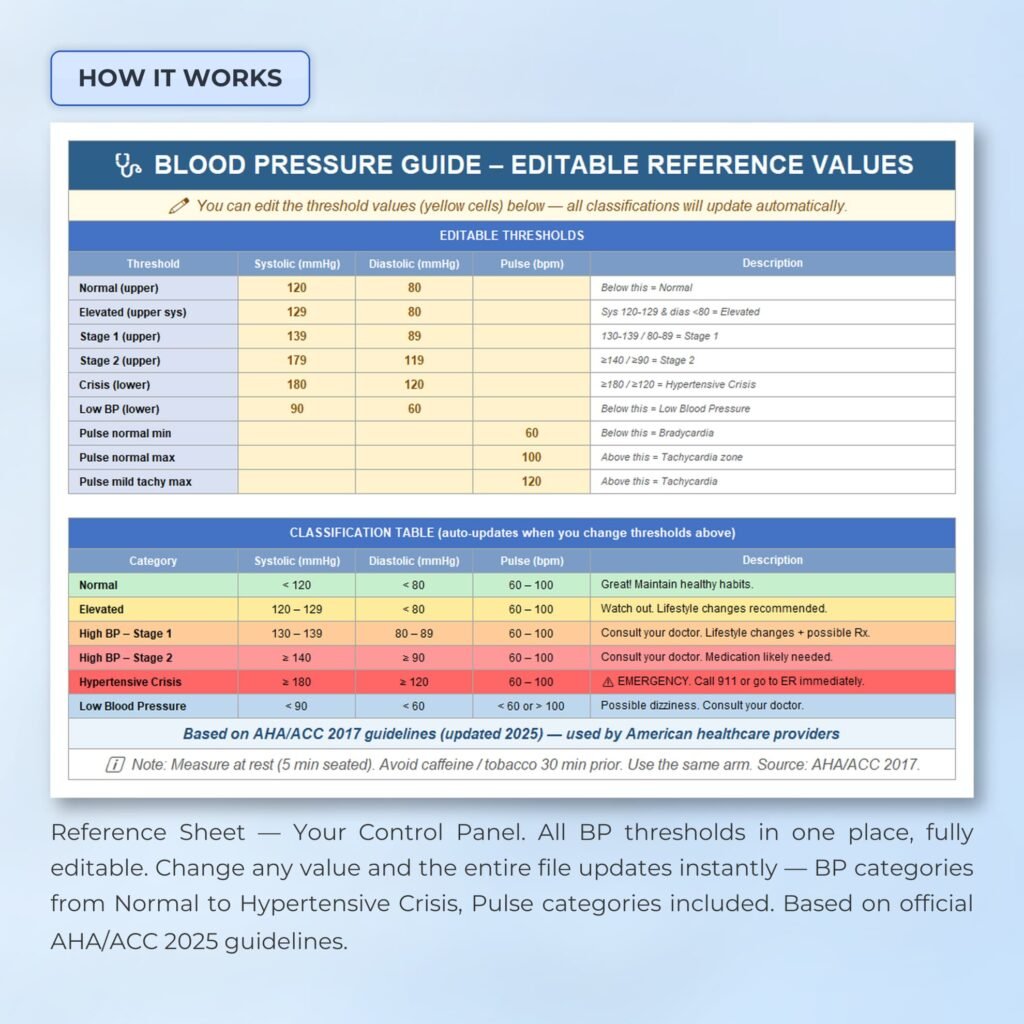
A blood pressure log is only as helpful as the readings inside it. The AHA and CDC both stress that home measurements should be taken carefully: sit quietly, avoid talking, rest before the reading, keep your feet flat on the floor, support your arm at heart level, and avoid caffeine, smoking, or exercise for 30 minutes beforehand. If your technique changes every time, your log becomes less reliable.
Paper log vs. digital tracker
A paper log can work, especially if you only want a simple record. But a digital tracker is often easier to maintain because it keeps everything in one place, makes patterns easier to review, and reduces the chance of missing entries or losing pages. For people who check their blood pressure regularly, a digital format can be much more practical than writing readings in random notebooks or phone notes. This is an inference based on how official blood pressure logs are structured around repeat entries and trend review over time.
Common mistakes when keeping a blood pressure journal
One common mistake is writing down only one number once in a while. Another is forgetting the time of day. Blood pressure changes throughout the day, so your log is far more useful when you record readings consistently and in context. A third mistake is skipping readings you do not like. A helpful log should reflect your actual routine, not only the “good” numbers. The AHA’s logging instructions emphasize consistency, repeated readings, and bringing full records to your healthcare professional.
A simple blood pressure log routine
If you want an easy system, keep it simple:
- measure at the same times each day
- take two readings one minute apart
- record both readings
- note whether it was morning or evening
- keep everything in one consistent log
That structure closely matches the guidance in the AHA and CDC blood pressure logs and is realistic enough for most people to maintain.
Final thoughts
If you are serious about home monitoring, learning how to keep a blood pressure log is just as important as learning how to take the reading itself. A good log helps you stay consistent, makes trends easier to understand, and gives you something clear to review over time. The simpler your system is, the more likely you are to keep using it. Official guidance from the AHA and CDC points in the same direction: take readings consistently, record them carefully, and track them over time.